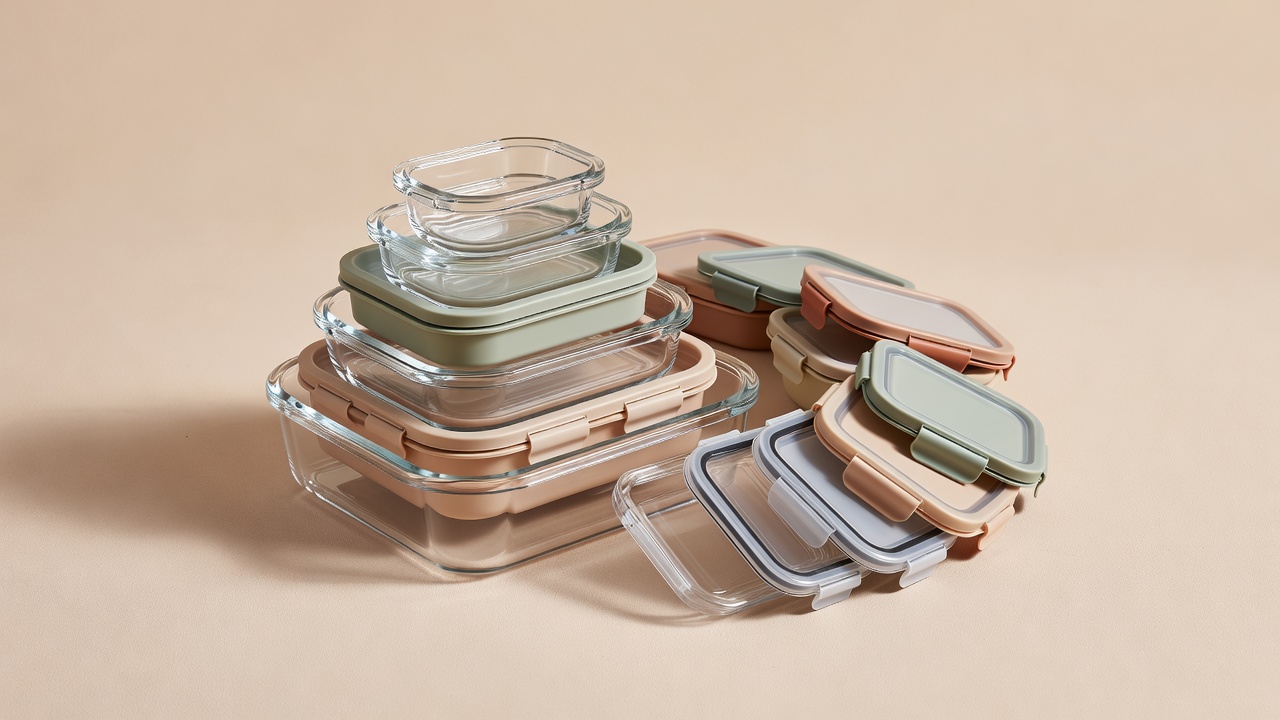
Take stock before buying a set
Open the cupboard and pair each container with its lid. Notice which pieces you reach for and which stay at the back. An awkward pile may need fewer sizes or a better drying spot, not a complete replacement. Keep existing food-safe containers when they remain suitable for their intended use.
Think through three real meals: a lunch carried upright, leftovers reheated at home and something stored in the freezer. These are different jobs. One container can sometimes handle all three, but a heavy dish that works well in the oven may be inconvenient on a long commute. Buying for the actual meal prevents a versatile-looking set from becoming unused storage.
Compare materials by the task
Glass lets you see contents and usually resists food staining. Its weight and potential to break matter when packing children's lunches or carrying several portions. Heat resistance is product-specific: check instructions for oven use, microwave use and sudden temperature changes. A glass base does not make every lid heat-safe.
Stainless steel is durable and useful for travel, but ordinary metal containers do not belong in a microwave. Opaque walls can also make leftovers easier to forget. A visible label or a designated fridge shelf helps. Check the closure separately; a lunch box with a loose lid is not necessarily suitable for soup.
Food-safe plastic can offer low weight and easy stacking. Use only within the manufacturer's temperature and food-contact guidance. Do not assume a takeaway tub is designed for indefinite reheating. Replace pieces with damage that prevents effective cleaning or reliable use, and check local disposal guidance rather than assuming all rigid plastic is accepted.
Silicone containers and bags can fold into small spaces, but flexible sides may be awkward for liquids. Corners, seals and drying racks deserve attention. Check that the product is intended for food contact and for the temperatures you plan to use. “Silicone” alone is not a complete specification.
Compare the everyday trade-offs
| Option | Useful for | Check first |
|---|---|---|
| Glass | Visible leftovers and home storage | Weight, thermal limits, lid care |
| Stainless steel | Travel and impact resistance | Leak resistance and reheating plan |
| Food-safe plastic | Lightweight lunches and nesting | Wear, stated temperature limits |
| Food-contact silicone | Flexible storage and small spaces | Drying, seal cleaning, support for liquids |
Make washing and drying part of the choice
A container used daily needs a cleaning routine you can sustain. Read dishwasher guidance for the base, lid and gasket separately. Remove seals only where the design allows, clean the channels and reassemble once everything is dry. A lid with hidden grooves may need more attention than a simple press-on cover.
Do not pack away damp containers just to clear the counter. Moisture trapped between nested pieces can create odor and hygiene problems. If your drying area is small, two easy-to-clean containers may serve you better than a large set with complicated lids. Air-drying space is a real storage requirement, not an afterthought.
Use a small rotation
Choose a place for empty containers and a separate, obvious place for lids. Before shopping, check what needs using in the fridge. Mark stored food with its contents and date, and follow food-safety guidance for cooling, refrigeration and reheating. A reusable box does not extend safe storage time by itself.
Try your current arrangement through several normal meals before adding another size. Notice whether food gets eaten, lunches arrive intact and the container returns to use. These observations are more useful than a promise that one material is universally greener. Manufacturing, washing, breakage and frequency all influence environmental comparisons.
Your next-use checklist
- Match the size to one meal you regularly prepare.
- Test the closed container with water over a sink before relying on it for travel.
- Check heat limits for every component.
- Make room to dry the lid and seal fully.
- Keep using suitable containers you already own.